
Tides of Fortune
Providence

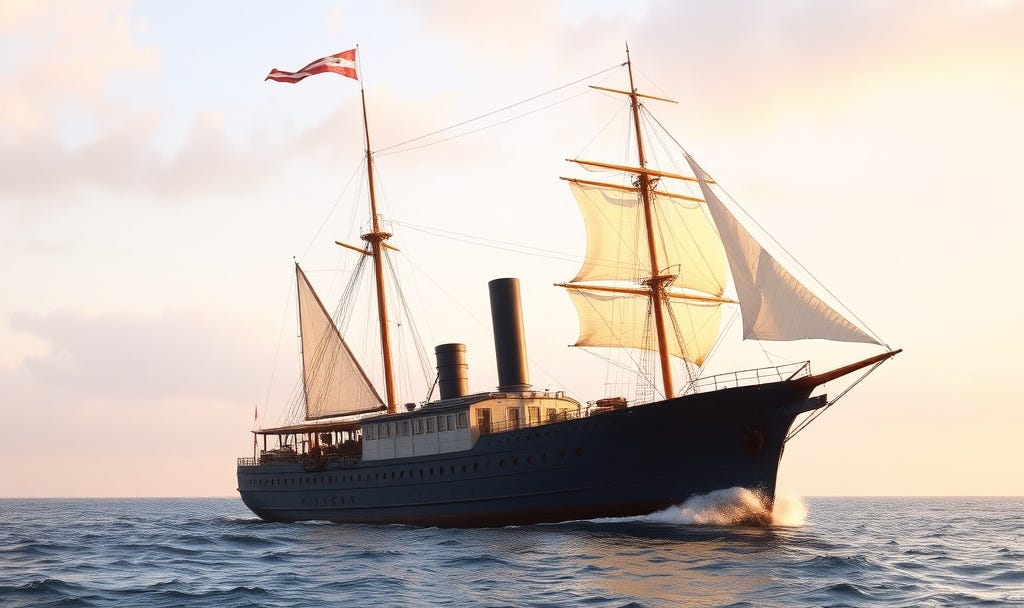
Tides of Fortune is my favorite series to write. It began in 1821, when Florida became part of the United States. The latest installment, Providence
, is set in 1855. From the start, I envisioned something broader than a single time period. My plan is to follow the gang’s adventures all the way through the Civil War.
Providence carries Nick and the crew from their crossing of the Central American isthmus in Nicaragua—the most viable route between oceans at the time—into the Caribbean. Their ultimate destination, for now, is New York.
The era fascinates me because it’s often overshadowed by the Civil War, yet so much of what happened in these decades shaped that conflict. The political tensions, the economic ambitions, and—most importantly—the technological advances all helped determine how the war would ultimately unfold.
One of the most compelling threads is the rise of the filibusters—American military adventurers who sought to seize control of foreign lands. The term once referred to 17th-century buccaneers raiding Spanish territories. By the mid-1800s, it described Americans like William Walker, who invaded Nicaragua and briefly declared himself president.
Walker’s ambitions collided with those of Cornelius Vanderbilt, whose Accessory Transit Route across Nicaragua was the lifeline between the Atlantic and Pacific before the Panama Canal. The clash between Walker’s expansionist dreams—he aimed to turn Nicaragua into a slave state—and Vanderbilt’s industrial capitalism created a volatile backdrop. Walker’s weapon was war. Vanderbilt’s was money. In the end, money proved more powerful.
Another theme running through Providence is sail versus steam—more broadly, man versus machine. The mid-nineteenth century marked the tipping point when steamships began overtaking sailing vessels in both naval and merchant fleets. Through Nick Van Doren’s eyes, we see a seasoned sailor’s reluctance to trust machinery, and then his gradual recognition of its advantages.
What strikes me most about this transition are the lost arts left behind. Navigation shifted from an observational craft—reading stars, swell, wind, and color—to an instrument-based science. A steam engine could drive a ship on any compass heading regardless of tide or current. The subtle skills of “sailing with the tide,” of trimming canvas to work with sea state and wind shifts, began to fade.
In Providence, I stage a kind of John Henry moment—canvas against coal—when Nick and the gang attempt to outrun a British sloop-of-war. It’s a race not just between ships, but between eras.
And that tension—between old skills and new power—is what makes this period so compelling to explore.